

Updated June 2026
Discrimination and harassment are related, but they are not the same thing. Workplace discrimination usually involves an employer treating an employee differently because of a protected characteristic, such as race, sex, age, disability, religion, national origin, pregnancy, sexual orientation, gender identity, or another legally protected trait. Workplace harassment usually involves unwelcome conduct based on a protected trait that is severe or pervasive enough to create an intimidating, hostile, abusive, or offensive work environment.
In simple terms, discrimination often involves an employment decision, while harassment often involves conduct. But the two can overlap. A hostile work environment may be a form of discrimination, and harassment complaints may lead to retaliation or wrongful termination if the employer punishes the employee for speaking up.
Swartz Swidler represents employees in New Jersey, Pennsylvania, Philadelphia, and South Jersey in workplace discrimination, sexual harassment, hostile work environment, retaliation, wrongful termination, and related employment law matters.
Direct Answer
Discrimination is usually unfair treatment because of a protected characteristic. Harassment is usually unwelcome conduct based on a protected characteristic that affects the work environment. For example, denying a promotion because of sex may be discrimination. Repeated sexual comments, racial slurs, threats, or humiliating jokes may be harassment if the conduct is serious enough under the law.
Questions about harassment or discrimination at work? Call Swartz Swidler at 856.685.7420 or submit an employment law claim online.
Harassment vs. Discrimination at a Glance
| Issue | Discrimination | Harassment |
|---|---|---|
| Basic meaning | Unfair treatment because of a protected characteristic. | Unwelcome conduct based on a protected characteristic. |
| Common form | Hiring, firing, pay, promotion, discipline, job assignment, or benefits decision. | Comments, slurs, threats, unwanted touching, ridicule, intimidation, offensive images, or repeated conduct. |
| Example | An employee is denied a promotion because of pregnancy, age, race, disability, sex, or religion. | An employee is repeatedly subjected to sexual comments, racial slurs, disability-related mockery, or bias-based threats. |
| Evidence | Comparators, hiring records, pay records, promotion criteria, discipline history, performance reviews. | Messages, witness names, complaint records, timeline, screenshots, offensive materials, employer response. |
| Related claim | Retaliation may occur after an employee reports discrimination. | Retaliation may occur after an employee reports harassment. |
What Is Workplace Discrimination?
Workplace discrimination occurs when an employer treats an employee or job applicant unfavorably because of a protected characteristic. Discrimination can affect any part of employment, including hiring, firing, promotions, pay, discipline, benefits, assignments, training, scheduling, leave, and workplace opportunities.
Examples of workplace discrimination may include:
- refusing to hire someone because of race, religion, disability, age, pregnancy, sex, national origin, sexual orientation, or gender identity;
- firing an employee because of a protected trait;
- paying employees differently because of sex, race, age, disability, or another protected characteristic;
- denying promotion opportunities to employees in a protected group;
- disciplining one group of employees more harshly than others for similar conduct;
- denying reasonable accommodations for disability, pregnancy, or religion when required by law;
- assigning worse shifts or duties because of a protected trait; or
- using policies that disproportionately harm a protected group without a lawful reason.
If the issue involves unequal treatment, denied opportunities, discipline, pay, termination, or employment decisions tied to a protected trait, review Swartz Swidler’s page for workplace discrimination lawyers.
What Is Workplace Harassment?
Workplace harassment is unwelcome conduct based on a protected characteristic. Harassment may include verbal, physical, visual, digital, or intimidating conduct. It can come from supervisors, coworkers, customers, clients, vendors, owners, or others connected to the workplace.
Harassment may include:
- racial slurs or offensive race-based comments;
- sexual comments, unwanted advances, or sexual images;
- mockery based on disability, age, religion, pregnancy, national origin, gender identity, or sexual orientation;
- offensive jokes, insults, ridicule, or humiliation;
- threats, intimidation, or aggressive conduct;
- unwanted touching or blocking movement;
- repeated comments about someone’s body, accent, clothing, medical condition, or religious practice;
- displaying offensive images, cartoons, memes, or symbols at work; or
- retaliation after an employee reports harassment.
Harassment is not automatically illegal just because conduct is rude, unfair, or unpleasant. The legal question is usually whether the conduct was based on a protected characteristic or protected activity and whether it was serious enough under the applicable law.
If the conduct involves sexual comments, advances, or sex-based hostility, review Swartz Swidler’s page for sexual harassment attorneys. If the conduct involves threats, pressure, isolation, humiliation, or coercive behavior, review the firm’s guide to workplace intimidation.
Can Harassment Be a Form of Discrimination?
Yes. Harassment can be a form of employment discrimination when it is based on a protected characteristic and affects the terms, conditions, or environment of employment. This is why hostile work environment claims are often discussed under discrimination law.
For example:
- racial slurs may support a race-based hostile work environment claim;
- repeated sexual comments may support a sexual harassment claim;
- mocking an employee’s disability may support a disability harassment claim;
- threats after reporting discrimination may support a retaliation claim;
- anti-religious comments may support religious harassment claims; and
- harassment based on pregnancy, gender identity, sexual orientation, age, or national origin may raise discrimination issues.
If the harassment involves race-based language, review Swartz Swidler’s guide to racial slurs at work. If the issue specifically involves race or color discrimination, visit the firm’s page for racial discrimination attorneys.
Sexual Harassment vs. Sex Discrimination
Sexual harassment and sex discrimination are related, but they are not identical.
Sex discrimination may involve an employer making decisions because of sex, pregnancy, childbirth, breastfeeding, sexual orientation, gender identity, gender expression, sex stereotypes, or related protected traits. Examples may include denying promotion to women, refusing accommodations related to pregnancy, paying employees differently because of sex, or disciplining employees differently based on gender.
Sexual harassment involves unwelcome sexual or sex-based conduct. It may include quid pro quo harassment or hostile work environment harassment.
Quid pro quo sexual harassment
Quid pro quo harassment may occur when a supervisor or person with authority links job benefits or job consequences to sexual conduct. Examples may include demanding sexual favors in exchange for promotion, better shifts, continued employment, favorable assignments, or protection from discipline.
Hostile work environment sexual harassment
Hostile work environment sexual harassment may occur when unwelcome sexual or sex-based conduct is severe or pervasive enough to make the workplace intimidating, hostile, abusive, or offensive.
If you are unsure whether your situation is sexual harassment, sex discrimination, retaliation, or all three, review Swartz Swidler’s main page for workplace sexual harassment attorneys.
Examples: Harassment or Discrimination?
| Workplace situation | May involve discrimination | May involve harassment |
|---|---|---|
| Employee is denied promotion after announcing pregnancy. | Yes, if pregnancy affected the decision. | Possibly, if the employee is also subjected to pregnancy-related comments or hostility. |
| Supervisor repeatedly makes sexual comments to an employee. | Possibly, depending on job consequences and sex-based treatment. | Yes, if the comments are unwelcome and serious enough under the law. |
| Employee is paid less than coworkers because of race or sex. | Yes, if pay differs because of a protected trait. | Not necessarily, unless there is also hostile conduct. |
| Coworkers use racial slurs and management ignores complaints. | Yes, harassment may be a form of discrimination. | Yes, if the conduct creates a hostile work environment. |
| Employee is fired after reporting harassment. | Possibly, depending on the underlying protected trait. | The original conduct may be harassment, and the firing may be retaliation or wrongful termination. |
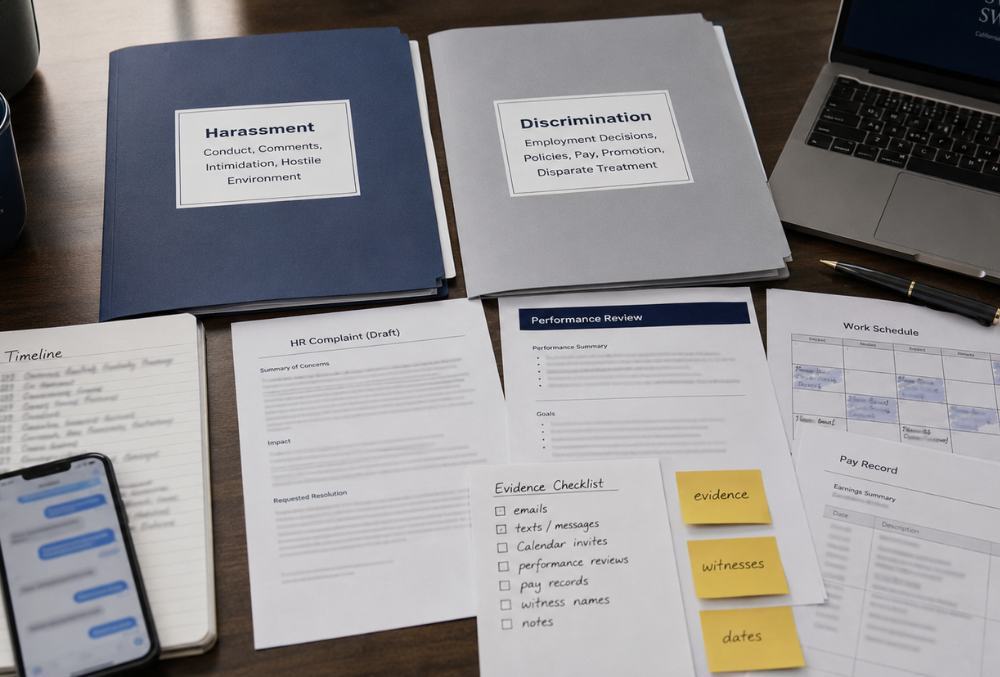
Harassment or Discrimination
New Jersey and Pennsylvania Protections
Employees in New Jersey and Pennsylvania may have protection under federal law and state law. The exact claim, deadline, agency, and legal standard can depend on where you work, employer size, protected characteristic, and what happened.
New Jersey
In New Jersey, the New Jersey Law Against Discrimination prohibits discrimination and bias-based harassment in employment based on actual or perceived protected characteristics. These may include race, color, religion, creed, national origin, nationality, ancestry, sex, pregnancy, breastfeeding, sexual orientation, gender identity or expression, disability, marital status, civil union or domestic partnership status, military service liability, age, genetic information, and other protected categories.
Pennsylvania
In Pennsylvania, the Pennsylvania Human Relations Act prohibits employment discrimination based on protected classes such as race, color, sex, age, religious creed, national origin, ancestry, disability, relationship to a person with a disability, and other protected categories. Pennsylvania also prohibits retaliation when employees stand up against discrimination.
Because state and federal laws can overlap, employees should avoid assuming that a workplace issue is “only harassment” or “only discrimination.” Many cases involve both, along with retaliation if the employee is punished for reporting.
What If You Report Harassment or Discrimination and Are Punished?
An employer should not retaliate against an employee for making a good-faith complaint about harassment, discrimination, or other protected workplace concerns. Retaliation can include termination, demotion, discipline, schedule changes, reduced hours, threats, isolation, worse assignments, or pressure to resign.
If you were punished after making a complaint, review Swartz Swidler’s guide to retaliation after reporting discrimination. If you were fired after a complaint, review the firm’s page for wrongful termination attorneys.
What Evidence Helps in Harassment and Discrimination Claims?
The evidence depends on the type of claim. Discrimination claims often focus on employment decisions and comparison evidence. Harassment claims often focus on conduct, frequency, severity, witnesses, employer knowledge, and the employer’s response.
Evidence to save if you experienced harassment or discrimination
- Emails, texts, Slack messages, Teams messages, social media messages, or voicemails
- HR complaints and employer responses
- Witness names and job titles
- Performance reviews before and after the conduct
- Pay records, promotion records, discipline records, schedules, or job assignments
- Photos or screenshots of offensive materials, images, posts, or messages
- Notes showing dates, times, locations, exact words, and what happened
- Employee handbook, anti-harassment policy, or discrimination policy
- Termination letter, demotion notice, write-up, or severance agreement
- Agency filings or investigation notices
What Should You Do If You Are Experiencing Harassment or Discrimination?
1. Write down what happened
Create a timeline with dates, names, witnesses, locations, what was said or done, and how it affected your job.
2. Save evidence lawfully
Preserve messages, screenshots, emails, photos, HR complaints, performance records, schedules, and other documents you are allowed to keep. Avoid taking confidential or privileged employer records without legal guidance.
3. Use the proper reporting channel when safe and appropriate
If your employer has a policy, consider following it. If your supervisor is the problem, report to HR, another manager, ownership, compliance, or another designated contact.
4. Be clear about the protected issue
If the problem involves race, sex, age, disability, religion, pregnancy, sexual orientation, gender identity, national origin, harassment, discrimination, or retaliation, say that clearly in your complaint.
5. Watch for retaliation
Document any write-ups, threats, schedule changes, demotion, reduced hours, exclusion, or termination after you complain.
6. Speak with an employment lawyer
Harassment and discrimination claims can involve multiple laws, deadlines, agencies, and evidence issues. Legal guidance can help you understand what type of claim you may have and what steps may protect your rights.
Frequently Asked Questions About Harassment and Discrimination
Are harassment and discrimination the same thing?
No. Discrimination usually involves unfair treatment because of a protected characteristic. Harassment usually involves unwelcome conduct based on a protected characteristic. However, harassment can be a form of discrimination when it creates a hostile work environment.
Can one workplace situation involve both harassment and discrimination?
Yes. A worker may experience discriminatory treatment, harassment, and retaliation in the same situation. For example, an employee may be denied promotion because of sex, subjected to sexual comments, and then punished for reporting the conduct.
What is a hostile work environment?
A hostile work environment may exist when unwelcome conduct based on a protected characteristic is severe or pervasive enough to create an intimidating, hostile, abusive, or offensive workplace.
Is one offensive comment enough for a harassment claim?
It depends. Isolated comments may not be enough unless extremely serious. The severity, frequency, context, speaker, employer knowledge, and impact on the workplace all matter.
What is sexual harassment?
Sexual harassment is unwelcome sexual or sex-based conduct that affects the workplace. It may involve quid pro quo harassment, hostile work environment harassment, unwanted comments, sexual advances, touching, threats, or retaliation after reporting.
What is discrimination at work?
Workplace discrimination occurs when an employer treats an employee or applicant unfavorably because of a protected characteristic, such as race, sex, age, disability, religion, national origin, pregnancy, sexual orientation, gender identity, or another protected trait.
Can I be fired for reporting harassment or discrimination?
An employer should not punish an employee for making a good-faith complaint about harassment or discrimination. If you are fired, demoted, written up, threatened, or isolated after reporting, the issue may involve retaliation or wrongful termination.
What should I save if I think I have a claim?
Save complaints, messages, witness names, performance reviews, write-ups, pay records, schedules, photos, screenshots, employer responses, termination records, and a timeline of events.
Talk to an Employment Lawyer About Harassment or Discrimination
If you are unsure whether your workplace issue is harassment, discrimination, retaliation, wrongful termination, or a combination of claims, Swartz Swidler can help you understand the difference and evaluate what evidence may matter.
Harassed, discriminated against, or punished for speaking up?
If you experienced hostile conduct, unequal treatment, retaliation, or job loss after reporting workplace misconduct, Swartz Swidler can help you understand your rights and next steps.
Submit an employment law claim or call Swartz Swidler at 856.685.7420.
Related Harassment and Discrimination Resources
This page is for general informational purposes only and is not legal advice. Harassment, discrimination, hostile work environment, retaliation, wrongful termination, sexual harassment, racial harassment, disability discrimination, and related employment claims depend on the facts, timing, evidence, employer knowledge, applicable law, deadlines, and where the claim is filed.