
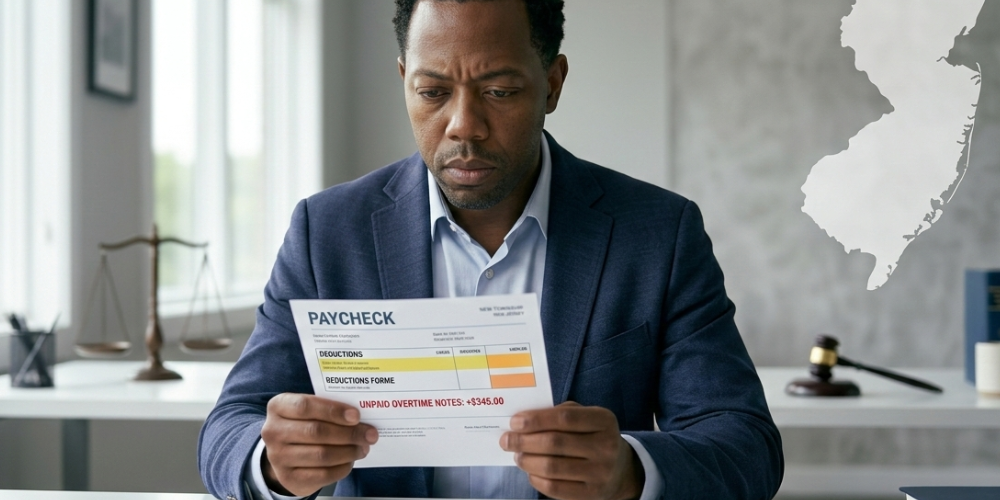
What Is Wage Theft in New Jersey?
Wage theft happens when an employer fails to pay workers the wages they are legally owed. In New Jersey, this can include unpaid overtime, minimum wage violations, illegal deductions, misclassification, or forcing employees to work off the clock.
Under New Jersey law, wage theft is illegal. Workers have strong protections under the New Jersey Wage Payment Law, the New Jersey Wage and Hour Law, and the federal Fair Labor Standards Act (FLSA).
If your employer kept money from your paycheck, failed to pay overtime, or manipulated your hours, you may have a legal claim.
If you’re unsure, speaking with a wage theft lawyer NJ workers trust can help you understand your rights quickly.
Common Examples of Wage Theft in NJ
Many workers don’t realize they are victims of wage theft until years later. Here are some of the most common violations we see:
1️⃣ Unpaid Overtime
In most cases, non-exempt employees must be paid time-and-a-half for hours worked over 40 per week. Employers violate the law when they:
-
Pay straight time instead of overtime
-
Ask you to “clock out” and keep working
-
Misclassify you as salaried to avoid overtime
Overtime violations are frequently handled under federal FLSA laws and New Jersey wage statutes.
2️⃣ Paying Below Minimum Wage
New Jersey sets a state minimum wage. If your employer pays you less than the legal minimum, even by a small amount, that can qualify as wage theft.
3️⃣ Off-the-Clock Work
If your employer requires you to:
-
Set up before clocking in
-
Clean up after clocking out
-
Attend unpaid meetings
-
Complete mandatory training unpaid
You may be entitled to back pay.
4️⃣ Illegal Paycheck Deductions
Employers generally cannot deduct money from your paycheck for:
-
Cash register shortages
-
Broken equipment
-
Customer walkouts
-
Uniform costs (in many cases)
Unauthorized deductions may violate the NJ Wage Payment Law.
5️⃣ Misclassifying Workers as Independent Contractors
Some employers label workers as “1099 contractors” to avoid paying overtime and payroll taxes.
But if your employer controls your schedule, duties, and supervision, you may legally be an employee — and entitled to overtime and wage protections.
What Laws Protect Workers From Wage Theft in NJ?
Several laws protect workers:
-
New Jersey Wage Payment Law
-
New Jersey Wage and Hour Law
-
Fair Labor Standards Act (FLSA)
New Jersey law is often more protective than federal law. For example, workers may recover up to six years of unpaid wages under state law.
Many wage theft cases are pursued as collective or class actions when multiple workers are affected.
You can learn more about wage and overtime protections through our FLSA practice resources.
How Much Money Can You Recover?
If your employer committed wage theft, you may be entitled to:
-
Unpaid back wages
-
Overtime premiums
-
Liquidated damages (often double the unpaid wages)
-
Attorneys’ fees
-
Court costs
For example:
If you were shorted $150 per week for two years, that’s over $15,000 in lost wages. With potential double damages, the amount could increase significantly.
Wage theft adds up quickly.
Signs Your Employer May Be Breaking the Law
You should speak with a wage theft lawyer in NJ if:
-
Your paycheck doesn’t match your hours worked
-
You are told you’re “exempt” but still perform hourly tasks
-
You’re asked to work before or after clocking in
-
You never receive overtime pay
-
Your employer discourages you from tracking hours
-
Coworkers complain about similar pay issues
If multiple employees are experiencing the same issue, it may qualify as a collective action.
Is Wage Theft a Crime in New Jersey?
In some cases, yes.
New Jersey strengthened its wage theft laws in recent years. Employers who knowingly withhold wages can face:
-
Civil penalties
-
Criminal charges
-
Increased financial liability
The law allows enhanced penalties for repeat offenders.
What Should You Do If You Suspect Wage Theft?
If you believe your employer is not paying you properly:
-
Save pay stubs and payroll records
-
Keep a record of hours worked
-
Preserve emails and text messages
-
Do not sign settlement documents without legal review
-
Speak with an employment attorney as soon as possible
There are strict deadlines for filing wage claims. Waiting too long could limit your recovery.
Can Your Employer Retaliate Against You?
No.
It is illegal for an employer to fire, demote, discipline, or harass you for:
-
Asking about unpaid wages
-
Filing a complaint
-
Joining a wage lawsuit
-
Speaking with an attorney
If retaliation occurs, you may have an additional legal claim.
Why Workers in Cherry Hill and Throughout NJ Contact Swartz Swidler
Wage theft cases require experienced legal representation. Employers often deny wrongdoing, claim exemptions, or attempt to pressure workers into silence.
Our team represents workers throughout New Jersey and Pennsylvania, including employees in Cherry Hill and surrounding communities.
If you are looking for a Cherry Hill employment attorney with experience handling wage and hour litigation, we are here to help.
You can also review our Employee Rights FAQ for additional guidance on workplace protections.
Frequently Asked Questions About Wage Theft in NJ
How long do I have to file a wage theft claim in NJ?
In most cases, workers have up to six years under New Jersey law, though federal claims may have shorter deadlines.
Can I sue my employer for unpaid overtime?
Yes. If your employer failed to pay overtime properly, you may file an individual or collective action.
What if I agreed to be paid a flat salary?
Even salaried employees may qualify for overtime depending on job duties.
How much does it cost to hire a wage theft lawyer?
Many wage theft cases are handled on a contingency basis, meaning you may not pay legal fees unless there is a recovery.
Speak With a Wage Theft Lawyer in NJ Today
If you suspect your employer is withholding wages, do not ignore it. The longer the violation continues, the more you could lose.
You have legal rights. And you may be entitled to significant compensation.
Contact Our NJ Wage & Hour Attorneys Today
At Swartz Swidler, protecting workers’ rights isn’t just our job — it’s our mission.