
Introduction: Payday Came. Your Paycheck Didn’t.
You showed up. You clocked in. You did the work. But when payday rolled around, your bank account was still empty. Whether your check was late, partial, or never arrived at all, the feeling is the same—frustration, anxiety, and betrayal.
If this has happened to you, you might be wondering, “Can they even do that?” Spoiler alert: no, they can’t. In New Jersey, employees are legally entitled to be paid on time and in full. And if your employer isn’t following the law, you have the power to fight back—and win.
In this article, we’ll explain what your rights are, how to document a violation, and the legal actions you can take to recover your hard-earned money. If you're tired of being left in the lurch on payday, Swartz Swidler is here to help.
What the Law Says: New Jersey Payday Requirements
New Jersey law is clear: employers must pay employees on time. According to the NJ Wage Payment Law, most workers must be paid at least twice a month, and all wages earned must be paid no later than 10 business days after the end of a pay period.
Employers Must:
- Pay all wages due at the agreed-upon pay interval (e.g., biweekly, semimonthly)
- Provide a pay stub detailing hours worked, rates, and deductions
- Not delay payment for administrative or financial reasons
Failure to pay wages on time is a legal violation, not just bad business.
NJ Legal Pay Schedule vs. Delayed Payment Timeline
| Event | Legal Timeline () | Delayed Payment Timeline () |
|---|---|---|
| Pay Period Ends | March 31 | March 31 |
| Legal Deadline to Pay | April 10 (10 business days max) | April 10 |
| Actual Pay Received | April 10 | April 20 (Late — 10 days overdue) |
| Violation Status | On time | Wage Payment Law Violation |
Common Excuses Employers Use—and Why They Don’t Hold Up
Let’s call them what they are: excuses. If your employer has said any of the following, know that none are valid under NJ law:
Employer Excuses vs. Employee Rights
Employer Excuse |
Your Legal Rights (in NJ) |
|---|---|
| “We had a payroll error.” | Still illegal. Employers are responsible for paying wages on time, regardless of mistakes. |
| “We’re waiting on client payments.” | Not your problem. Your wages can’t be delayed due to company cash flow. |
| “It’s just a one-time issue.” | ⏱Even one late paycheck is a violation under NJ Wage Payment Law. |
| “You’ll get it next week, promise.” | Promises don’t count—only payment within 10 business days of the pay period does. |
Your Legal Rights When You're Not Paid on Time
If your paycheck is late, partial, or missing, here’s what you need to know:
Under NJ Law:
- You are entitled to timely, full payment of all earned wages.
- You must receive payment within 10 business days of the end of the pay period.
- You are legally entitled to see your pay stubs and hours.
Under Federal Law (FLSA):
- Delayed wages may count as minimum wage or overtime violations.
- Employers can face liquidated damages, doubling the amount owed.
You’re protected regardless of your immigration status, salary level, or industry.
"Getting paid on time is a basic legal right—not a favor. New Jersey law has zero tolerance for employers who delay wages."— Richard Swartz, Esq., Founding Partner at Swartz Swidler
What to Do If You're Not Getting Paid on Time
You don’t need to be a legal expert to fight back. Here’s how to take action:
Step 1: Keep Detailed Records
- Track the hours you worked, when you were supposed to be paid, and what you received.
- Save texts, emails, and screenshots of time tracking apps or online portals.
Step 2: Ask for an Explanation (In Writing)
- Email your manager or HR asking for:
- When you’ll be paid
- Why your check was delayed
- Keep all communications—you may need them later.
Step 3: File a Complaint
You can file with:
- The New Jersey Department of Labor – Wage & Hour Division
- The U.S. Department of Labor – Wage and Hour Division (WHD)
These agencies investigate wage violations and can issue penalties.
Step 4: Contact a Wage Attorney
A skilled employment attorney can:
- Calculate what you're owed
- Send a demand letter to your employer
- File a lawsuit or class action
- Recover damages, penalties, and fees
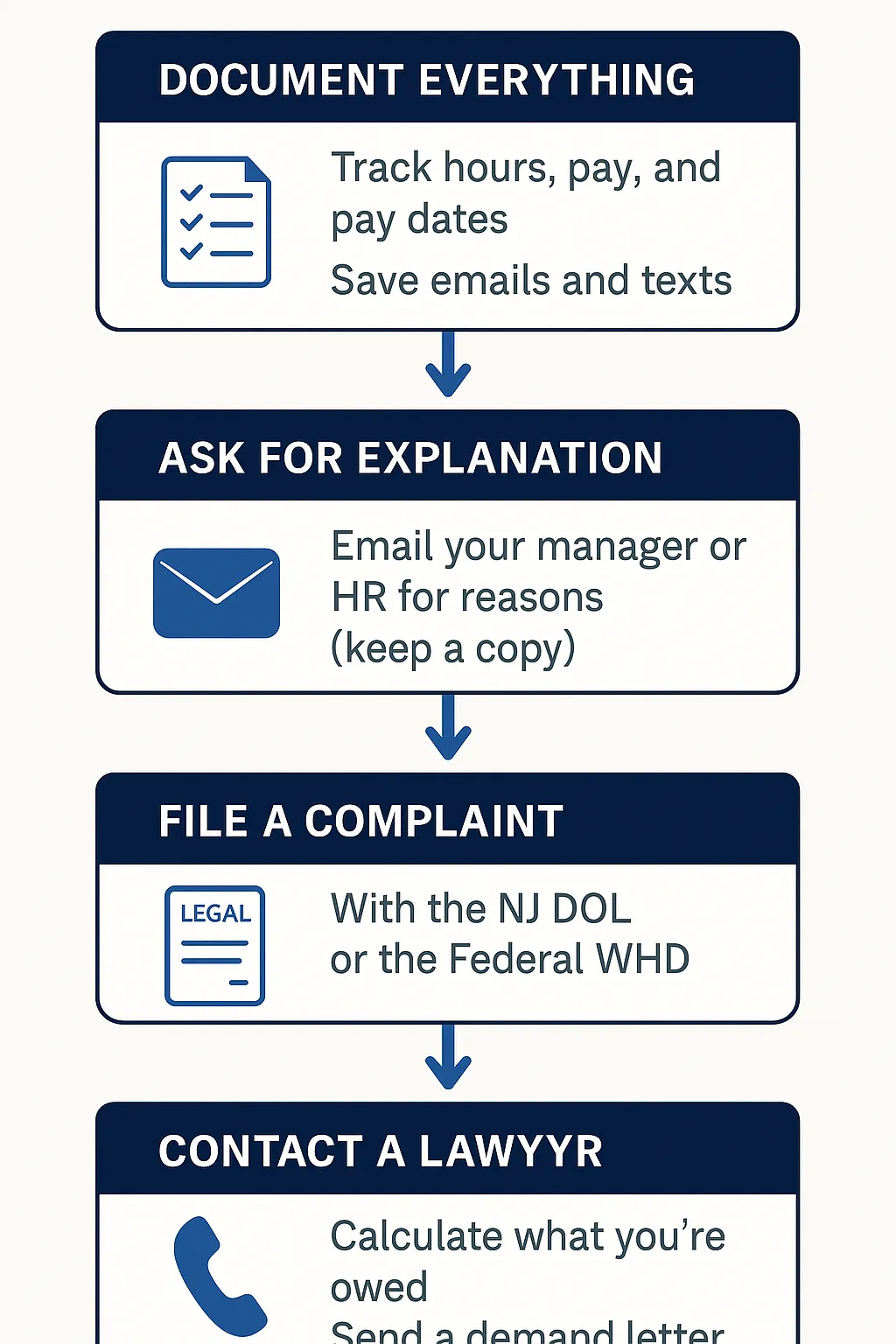 What to Do If Your Paycheck Is Late
How Much Can You Recover in a Claim or Lawsuit?
If your employer has violated NJ wage laws, you may be entitled to:
- Back pay (all wages owed)
- Liquidated damages (often double your unpaid wages)
- Interest
- Attorney’s fees
- Additional penalties for retaliation or repeat violations
In New Jersey, you can recover unpaid wages from up to six years ago.
What Could You Recover From an Unpaid Wages Claim?
Category |
Amount |
Explanation |
|---|---|---|
| Unpaid Wages | $2,000 | Your original, earned but unpaid wages. |
| Liquidated Damages | $2,000 | NJ law often allows double damages for unpaid wages. |
| Interest (Estimate) | $250 | Calculated over time on unpaid wages. |
| Legal Fees Covered | $300+ | Employer may be responsible for your attorney’s fees. |
| **Total Potential Recovery | $4,550+ | What you could recover by filing a successful claim or lawsuit. |
When Late Pay Becomes a Pattern
A one-time delay might be a mistake. But repeated late payments suggest deeper issues—possibly wage theft.
Signs it’s more than a fluke:
- You're paid late every pay period
- You're told to "wait" or accept partial pay
- Coworkers are having the same issue
In these cases, you may be part of a larger legal claim or class action. Swartz Swidler has extensive experience helping groups of workers recover millions in unpaid wages from employers across NJ.
Can You Be Fired for Reporting Late Pay?
No. It’s illegal for employers to retaliate against you for:
- Asking about your pay
- Filing a complaint
- Talking to a lawyer
If you’re fired or punished for speaking up, you may be entitled to:
- Reinstatement
- Lost wages
- Punitive damages
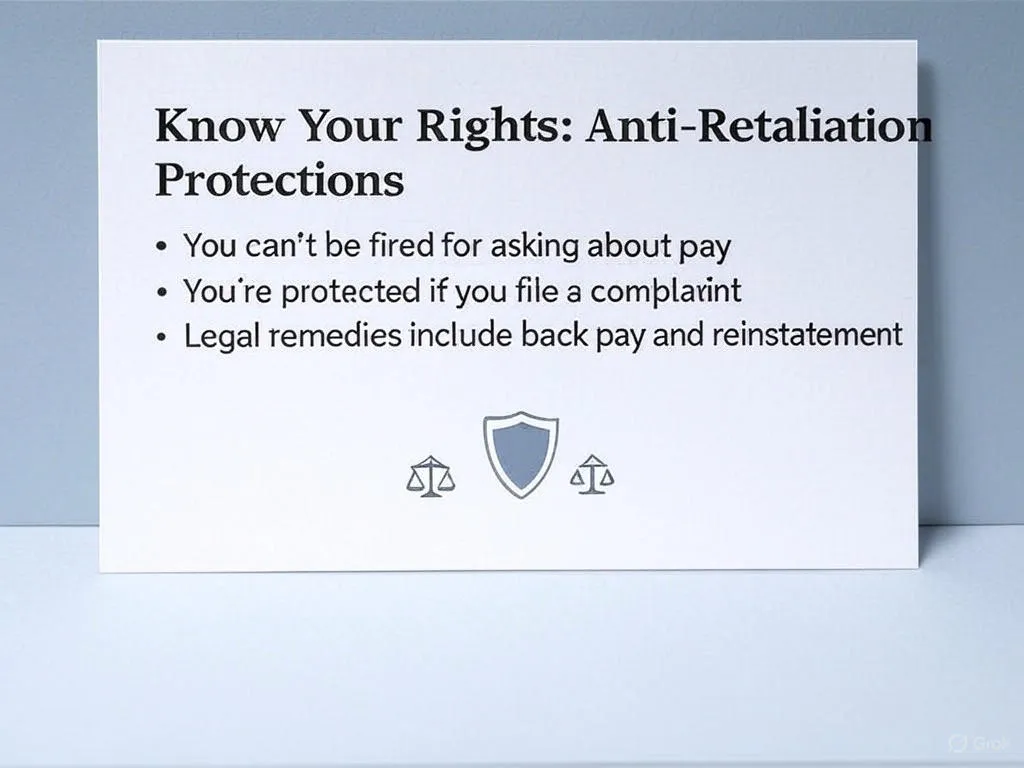 “Know Your Rights” card with bullet points on anti-retaliation protections
FAQs: Late Pay in New Jersey
-
Can I sue if I already quit my job?
- Yes. You can still recover unpaid wages, even if you’ve left the company.
-
What if I’m paid under the table or in cash?
- You still have legal protections—document your hours and contact an attorney.
-
Is there a time limit to file a complaint?
- Yes—6 years for wage claims under NJ law.
-
I’m a salaried worker. Do I have the same rights?
- Yes. Being salaried doesn’t mean your pay can be delayed without consequences.
Additional Resources for NJ Workers
- NJ Department of Labor – Wage & Hour Division
- U.S. Department of Labor – WHD
- Swartz Swidler – Unpaid Wages & Overtime
- Contact Swartz Swidler for a Free Consultation
Conclusion: Your Paycheck Isn’t Optional. It’s the Law.
You work hard—and your paycheck isn’t a privilege. It’s a legal right. If your employer isn’t paying you on time, don’t wait and hope it’ll get better.
At Swartz Swidler, we help New Jersey workers recover the wages they’ve earned—quickly and effectively. Whether you’ve been shorted one check or several, we’ll fight to make sure you’re paid what you’re owed.
Call (856) 685-7420 or request your free consultation today.
This article is general information, not legal advice. Laws change, and older articles may not reflect current law. Whether you have a claim depends on your facts and on deadlines that can be short. Prior results do not guarantee a similar outcome.