
Introduction: “We’re Letting You Go.”
Few words can shake your world quite like those. Whether it came out of nowhere or followed a tense period at work, being fired without cause in New Jersey can feel like a gut punch—especially when you have bills to pay, a family to support, and no clear explanation of what just happened.
Here’s the thing: while New Jersey is an “at-will” employment state, that doesn’t mean your employer can fire you for just any reason—and it certainly doesn’t mean you’re powerless.
In this guide, we’ll explain exactly what it means to be fired without cause in New Jersey, outline your legal rights, and give you actionable steps you can take today. If you’re questioning whether your termination was fair—or legal—you’re in the right place.
What Does “Fired Without Cause” Mean in New Jersey?
At-Will Employment: What It Actually Means
New Jersey follows the legal doctrine of at-will employment, which means an employer can terminate an employee at any time, for any reason—or no reason at all—as long as that reason isn’t illegal.
But here’s where many people get confused: being fired without cause doesn’t always mean your employer didn’t break the law. The key lies in why you were fired and whether any protected rights were violated.
Quick Definitions:
- Fired without cause: You were terminated without being given a specific reason, or for reasons unrelated to misconduct or performance.
- Wrongful termination: Your firing was illegal due to discrimination, retaliation, or violation of employment agreements.
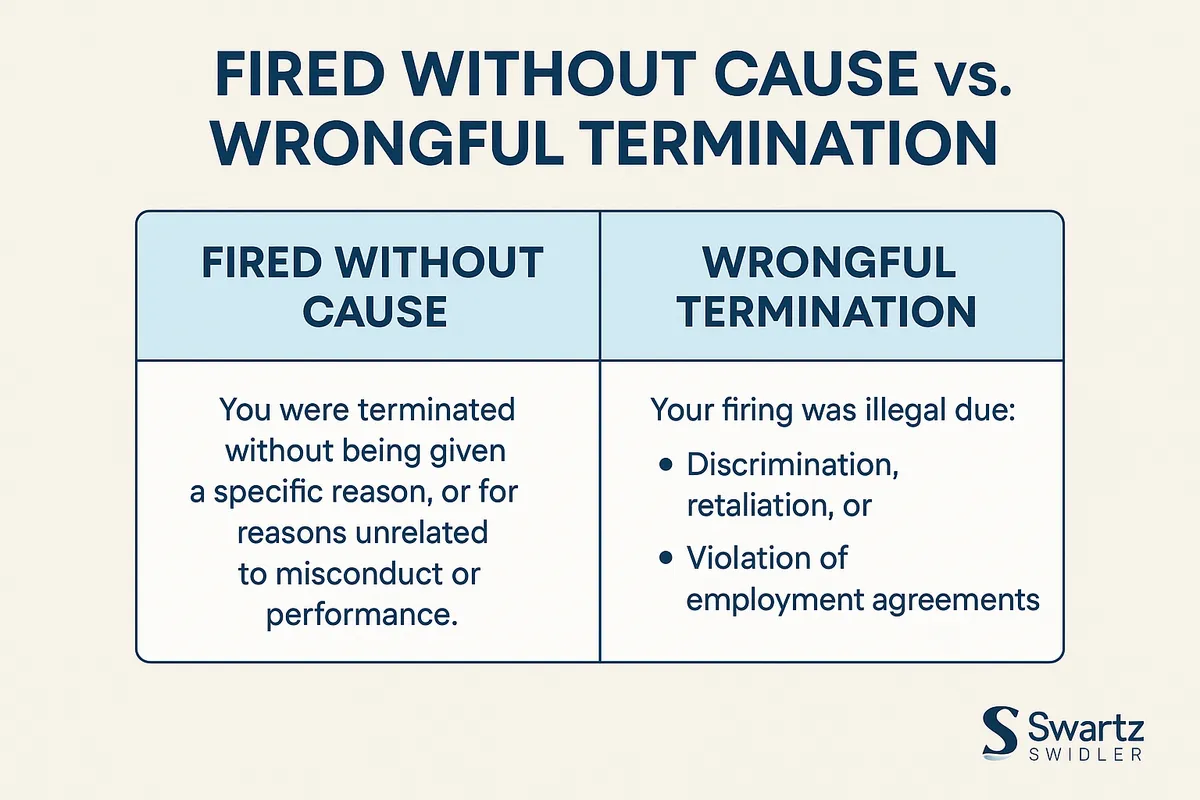 Fired Without Cause vs. Wrongful Termination
Exceptions to At-Will Employment in NJ
Even in an at-will state like New Jersey, there are several critical exceptions where firing someone without cause becomes illegal. If any of the following situations apply to you, you may have grounds for a wrongful termination claim.
Discrimination
Were you let go shortly after revealing your pregnancy, your age, or your disability? That could be discrimination.
Under the New Jersey Law Against Discrimination (NJLAD) and federal laws like Title VII of the Civil Rights Act, it is illegal to fire someone based on:
- Race or ethnicity
- Gender or sexual orientation
- Religion
- Age (40+)
- Disability or pregnancy
- National origin
Retaliation
If you were fired after reporting harassment, unsafe working conditions, or discrimination, that’s retaliation—and it’s illegal.
Example: A warehouse employee files a safety complaint with OSHA and is fired the next week. That’s textbook retaliation.
Family and Medical Leave
Employees are protected under FMLA and NJ’s Family Leave Act. If you were terminated during or shortly after taking protected leave, legal protections may apply.
Contractual Employment
Even in an at-will state, if you have:
- A written employment contract
- A union agreement
- Or even a verbal promise of job security
…your firing without cause may violate that agreement.
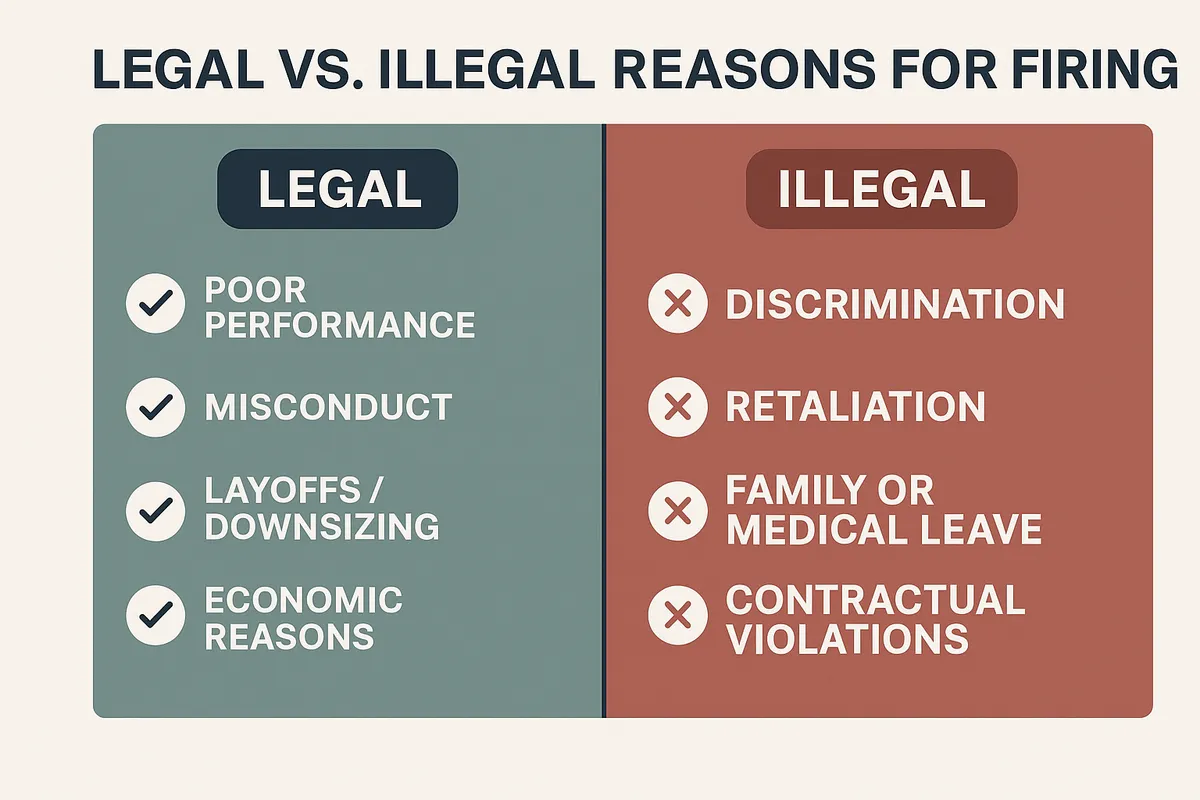 Legal vs. Illegal Reasons for Firing
Signs You May Have Been Wrongfully Terminated
Wondering if your firing crossed a legal line? Watch for these red flags:
- You were the only one let go after reporting unethical behavior
- Your replacement doesn't share your protected status (e.g., gender, race, age)
- You received stellar performance reviews—until you took medical leave
- You were terminated shortly after filing a complaint or lawsuit
- HR won’t provide a clear reason for your firing
What to Do Immediately After You’re Fired
If you suspect your firing was unjust—or even if you’re just unsure—taking the right steps early can make or break your case.
1. Stay Calm—but Act Quickly
Don’t lash out or badmouth your employer. Keep communication professional and focus on protecting yourself legally.
2. Request Documentation
Ask for a termination letter and your personnel file. This may include:
- Disciplinary records
- Performance reviews
- HR notes
3. Don’t Sign Anything Without Legal Review
Severance agreements may include waivers that limit your legal options. Have a lawyer review any documents before signing.
4. Document Everything
Write down:
- When and how you were fired
- Any suspicious or retaliatory behavior beforehand
- Names of witnesses
5. Apply for Unemployment
In most cases, you can receive unemployment benefits even if fired without cause.
Legal Options If You Suspect Wrongful Termination
Filing a Complaint
You may be able to file with:
- The New Jersey Division on Civil Rights (DCR)
- The Equal Employment Opportunity Commission (EEOC)
These agencies investigate claims of discrimination and retaliation. If they find merit in your complaint, they may offer mediation or issue a “right to sue” letter.
Taking Legal Action
Depending on your situation, you may be entitled to:
- Reinstatement of your job
- Back pay and benefits
- Emotional distress damages
- Punitive damages (in severe cases)
- Legal fees
How Swartz Swidler Can Help
At Swartz Swidler, we focus on employment law—it’s all we do. We’ve helped thousands of New Jersey workers fight wrongful terminations, negotiate better severance packages, and hold employers accountable.
"We often hear, ‘I didn’t even know I could fight back.’ That’s why we’re here—to give workers a voice and level the playing field."— Richard Swartz, Esq., Founding Partner
Common Questions About Termination Without Cause
Can I Get Unemployment Benefits?
Yes—unless you were fired for misconduct, you’re likely eligible.
What If I Was Still on Probation?
Even probationary employees are protected against illegal firings like discrimination or retaliation.
How Long Do I Have to File a Claim?
- NJLAD: 2 years from the date of termination
- DCR filing: 180 days
- EEOC: 300 days
Do I Need a Lawyer to File a Claim?
You can file on your own, but having an experienced employment lawyer increases your chances of success and often leads to better outcomes.
Additional Legal Resources for NJ Employees
- NJ Division on Civil Rights
- EEOC - How to File a Charge
- NJ Department of Labor – Unemployment Benefits
- Swartz Swidler – Wrongful Termination
Conclusion: Don’t Settle for Unfair Treatment
Getting fired without cause in New Jersey doesn’t mean you’re out of options. If your employer violated your rights, you may be entitled to compensation, reinstatement, or justice.
At Swartz Swidler, we’ll listen to your story, explain your rights, and fight for what you deserve—with no upfront costs. You only pay if we win.
Call us now at (856) 685-7420 or schedule a free consultation to get started.
Your future is worth fighting for—and we’re here to help.
Don’t Leave Your Rights Behind
If you've just been fired—especially without cause—every step you take next matters. Our Post-Firing Checklist is a quick, easy-to-follow guide designed to protect your legal options and financial future.
Inside, you’ll learn:
-
What documents to request
-
What not to sign without legal review
-
How to preserve evidence for potential legal claims
-
When and how to apply for unemployment
Knowledge is power—especially when your livelihood is on the line.
[Download the Post-Firing Checklist PDF] and take your first step toward clarity and control.
This article is general information, not legal advice. Laws change, and older articles may not reflect current law. Whether you have a claim depends on your facts and on deadlines that can be short. Prior results do not guarantee a similar outcome.